Well we all know the 2016 Honda Africa Twin has been out for a while now and I hadn’t ridden one for some reason or another. So my bad mood, after a spot of sulking and displeased phone calls, abruptly changed when I recently took delivery of two of them - the manual and DCT (or the ‘auto’ option).
I was certainly impressed with the two in their very attractive HRC paint-job and I think these are the best-looking adventure bikes at the moment, so there. But one thing immediately bugged me, which one is best and does the ‘auto’ version affect performance?
So in an unprecedented flurry of scientific experiments I decided to test them both in various situations. First I’d speed and acceleration test them using genuine and certified testing equipment, followed by a cunningly devised lap time around an off-road circuit, which should reveal some interesting answers, right? And, I bet you’re all excited to read my definitive results, well maybe?
But before I get into those let me tell you about my impressions of these big Honda adventure bikes. The first thing that hit me is how good the standard suspension is, both on and off-road. No unnecessary hard firmness that a lot of the ‘others’ have, which is how an adventure bike should feel, not like a superbike, right? Then there’s the new 998cc parallel-twin engine…
With a claimed 94hp and 98Nm it’s not as powerful as some but it has such a sweet power delivery I doubt if you’ll ever need more for what the CRF1000L is designed for. I like the new CRF designation as well, enforcing Honda’s off-road heritage and it does resemble their factory Dakar bike too, nice.
So the first performance visit was to the dyno. I came away with 81hp at the rear wheel and 85Nm of the good ol’ torque. Doesn’t sound much for 1,000cc but the smooth motor delivers a very substantial 70Nm at only 2,750rpm, right where you need it for vigorous off-road excursions. However, we discovered the DCT version will not ‘work’ on a dyno because the front wheel has to be turning to allow the gearbox to go through the gears, but they’re the same engines, so 81hp it is folks.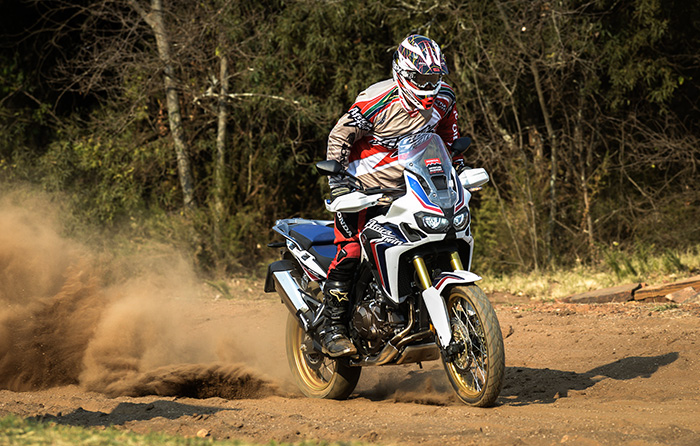
Even though the horsepower isn’t too big, the bike is. The very tall non-adjustable screen is very effective on the highway and I found the lowest seat height suited me the best (850mm from 870mm). Whilst in highway mode I did find the DCT version was better on fuel because you need only a tiny bit of throttle to cruise at legal speeds, especially if you put it into the economical ‘drive’ mode, not ‘sport’ where it revs harder and longer through the gears, then it’s a far more relaxed place to be compared to the manual bike. It also changes gear for you if you want to overtake, or you can jab at the downshift button on the left handle bar if you’re too impatient for the bike to do it for you. I would have liked these manual buttons to be the other way around though because pushing the one facing you should send the gear up, not down, but that’s just me coming from a drag racing background where we had an air-shifter button in that exact position. Force of habit and all that…
I didn’t record any figures for the fuel consumption but they are surprisingly good for such a big bike (232kg manual, 242kg DCT with a full tank, which is 19-litres). Obviously if you ride them flat-out it’ll drop dramatically, which I did, using the Race logic Performance Box from the UK, as used by Top Gear and other TV shows, so it’s very accurate to within 1km/h.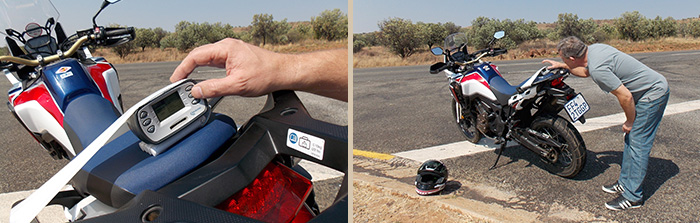
When I did the top speed run there was a quite stern headwind and don’t forget we’re at altitude (1500m), which is claimed to sap around 18% of the power output, but for bikes that weigh over 230kg and are very tall I recorded interesting numbers. The DCT produced 193km/h with 210 shown on the clock and the manual slightly slower at 190km/h with 207 on the clock, but basically the same and a bit of extra wind in my face could remove a ‘k’ or two anyway. The acceleration test was also near identical but don’t forget you have to be able to launch very hard on the manual, which is a skill on its own right, when the DCT just digs in and goes with hardly any rider input. Go to the performance table after for the definitive recordings.
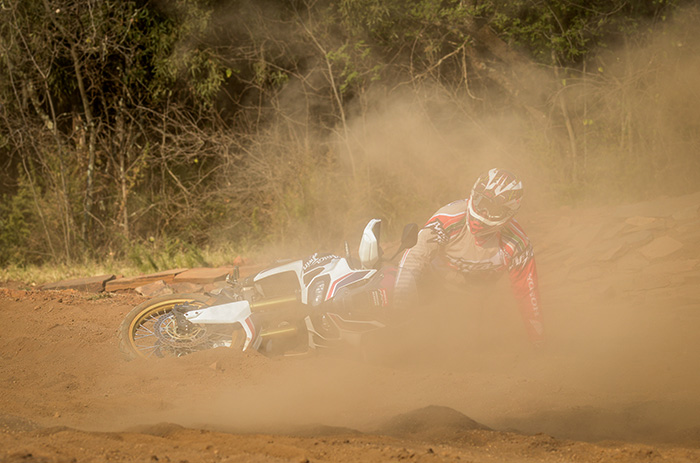
After all the tarmac based excitement dissolved we then took them to a very dusty 500m-long off-road track with tabletop jumps, deep sand, steep climbs and technical bits to really test the manual vs. DCT gearbox off-road environment conundrum. The rider was NOT ME but Dieter Engelbrecht who’s the chief instructor from the ADA training school, who’s very, very good with off-road madness to say the least. Go to www.adasa.co.za to see their training courses, which are all highly recommended. Anyway, as he flew through the air and battled through vile terrain we couldn’t believe the lap times were also identical showing what an amazing job Honda has done with this fourth generation DCT gearbox. Dieter even commented that the DCT is easier to ride at this extreme pace and the manual is only relevant through very, very technical sections where the clutch action might be beneficial.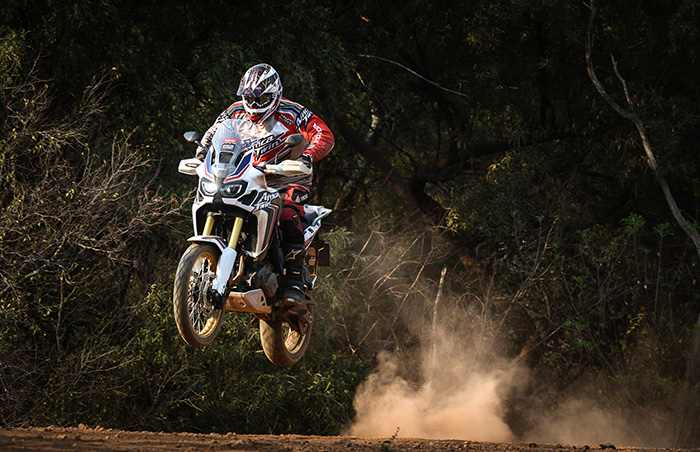
So there we go performance characteristics answered. For 20k more than the manual (R170,000 – R190,000) you can have the DCT with all of its laid-back benefits and more importantly there’s absolutely no performance benefits by going the manual route. Identical Twins – very much so.
Go to www.honda.co.za to book a highly recommended test ride from your local dealer.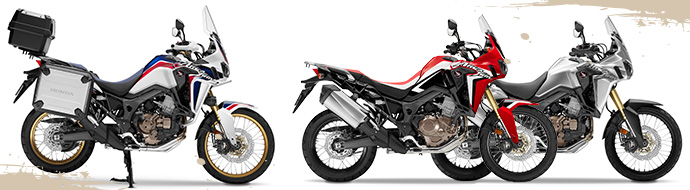
Performance table
Manual. DCT
0-60: 2.2 s 2.3s
0-100: 4.3s 4.4s
0-160: 11.1s 11.0s
¼ mile: 12.6s 12.5s
Top speed: 190km/h 193km/h
Off-road 500m track times.
Manual DCT
1st run: 46.12s 46.75
2nd run: 46.22 46.12